Skip to content

Easy Pad Thai Recipe – Better Than Takeout in 30 Minutes
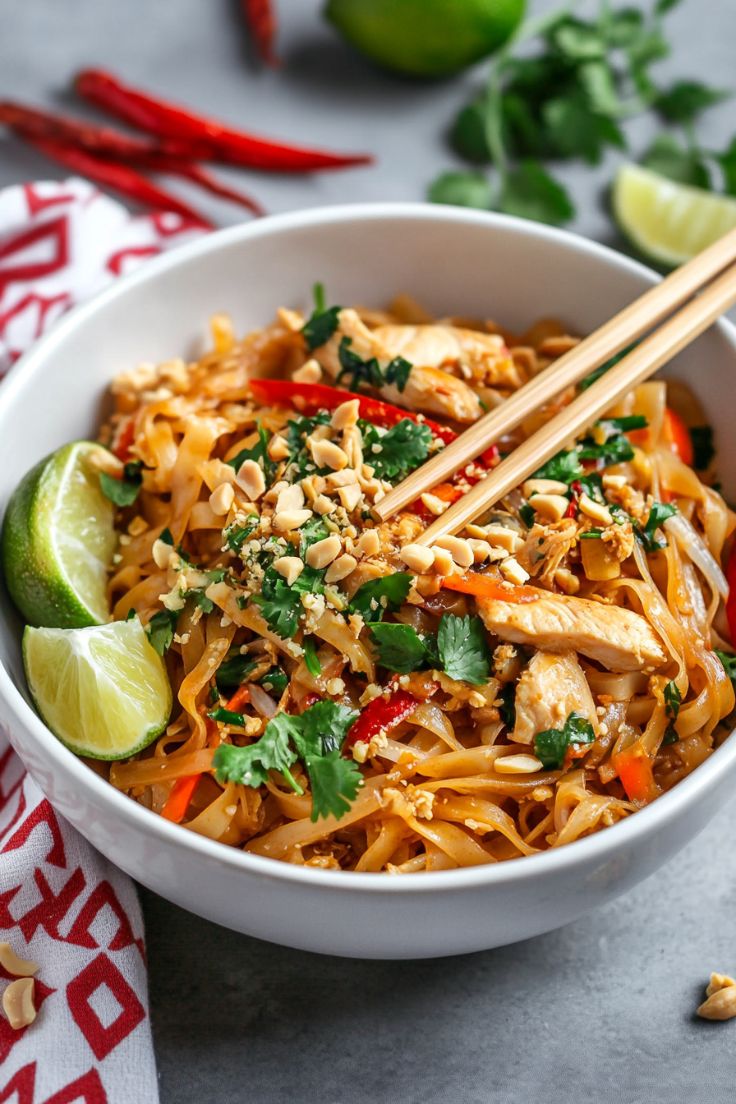
This easy Pad Thai recipe brings together tender rice noodles, your choice of shrimp, chicken, or tofu,
crisp vegetables, and a sweet, savory, tangy sauce.
Finished with crunchy peanuts, fresh cilantro, and a squeeze of lime, it’s a flavorful homemade dinner that’s perfect for busy weeknights.
One of the best things about this easy Pad Thai recipe is how customizable it is.
Choose shrimp, chicken, or extra-firm tofu depending on what you have available, and adjust the Sriracha to suit your preferred spice level.
It’s a great option when you want a homemade noodle dinner without making things overly complicated.
Why You’ll Love This Recipe
-
Ready in 30 minutes: With 15 minutes of preparation and 15 minutes of cooking, this recipe fits easily into a busy evening.
-
A flavorful homemade sauce: Fish sauce, soy sauce, brown sugar, rice vinegar, and Sriracha create a balance of savory, sweet, tangy, and spicy flavors.
-
Easy to customize: Choose shrimp, chicken, or tofu to make the dish your own.
-
A satisfying mix of textures: Tender noodles, scrambled eggs, fresh bean sprouts, and crunchy peanuts make every serving interesting.
-
Fresh and colorful: Red bell pepper, green onions, cilantro, and lime add freshness, color, and brightness.
-
Simple to prepare at home: The ingredients come together in a wok or large pan, making this a practical choice for a homemade noodle dinner.
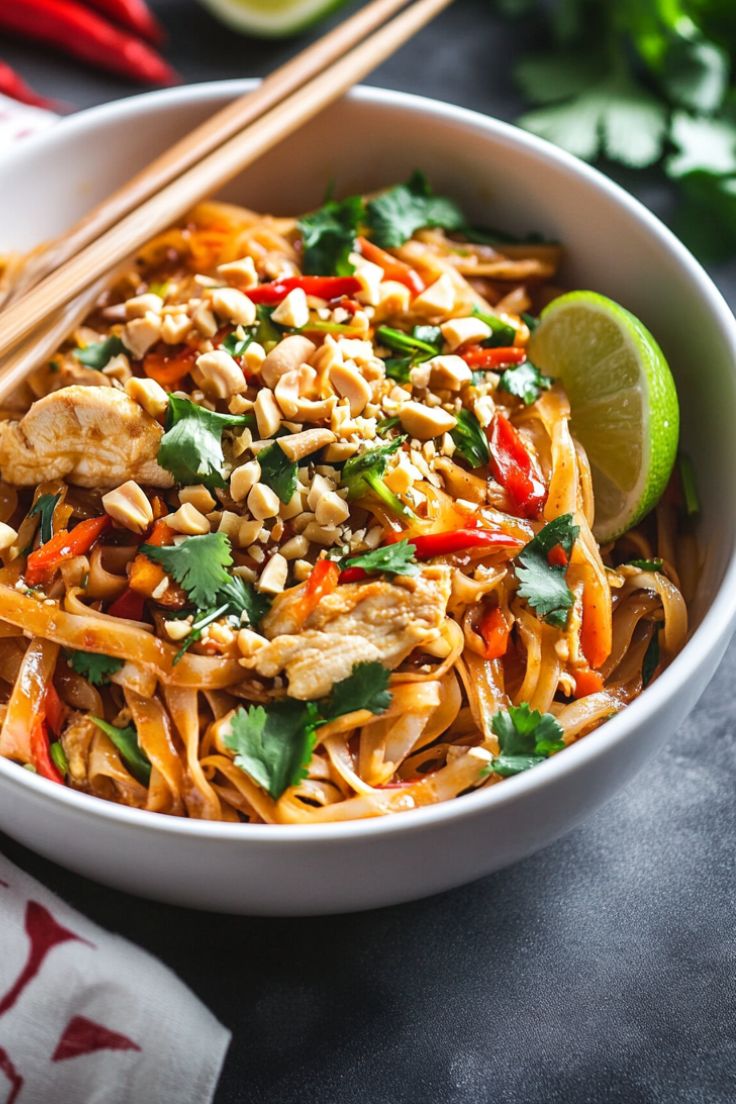
For Pad Thai
- Rice Noodles – Use flat rice noodles for the perfect chewy texture.
- Oil – Essential for stir-frying everything to perfection.
- Garlic – Adds depth and aroma to the dish.
- Protein (Shrimp, Chicken, or Tofu) – Choose your favorite for a delicious, customizable meal.
- Eggs – Scrambled into the noodles for added texture and flavor.
- Bean Sprouts – Brings a fresh, crunchy bite to balance the dish.
- Red Bell Pepper – Adds sweetness and color.
- Green Onions – For extra freshness and a mild onion flavor.
- Peanuts – Crunchy, nutty goodness that completes the dish.
- Limes – A squeeze of fresh lime juice brightens up the flavors.
- Cilantro – Optional, but adds a fresh, herby finish.
For Pad Thai Sauce
- Fish Sauce – The key ingredient for authentic umami flavor.
- Soy Sauce – Adds saltiness and depth to the sauce.
- Brown Sugar – Balances the savory flavors with a touch of sweetness.
- Rice Vinegar (or Tamarind Paste) – Provides the signature tangy kick.
- Sriracha – For a little heat (adjust to taste).
- Peanut Butter (Optional) – Creates a creamy, nutty richness.
Step-by-Step Guide to Making Easy Pad Thai
Step 1: Prepare the Rice Noodles
Start by cooking the flat rice noodles according to the package instructions until just tender. Rinse them under cold water to help prevent them from sticking together, then set them aside while you prepare the remaining ingredients.
Having the noodles ready before you begin stir-frying makes it easier to bring the dish together without unnecessary delays.
Step 2: Mix the Pad Thai Sauce
Whisk together the fish sauce, low-sodium soy sauce, light brown sugar, rice vinegar or tamarind paste, Sriracha, and optional peanut butter in a bowl.
Mix until the ingredients are well combined. Setting the sauce aside before cooking makes it easy to add everything to the pan at the right stage.
Step 3: Stir-Fry the Protein and Vegetables
Heat the oil in a wok or large pan over medium-high heat. Add your choice of shrimp, chicken, or tofu along with the minced garlic and sliced red bell pepper.
Cook the ingredients according to the directions for your chosen protein. Shrimp should turn pink, while chicken needs to be fully cooked before you move on to the next stage.
Keep the ingredients moving as needed so they cook evenly in the pan.
Step 4: Scramble the Eggs
Push the cooked ingredients to one side of the pan. Add a little more oil if needed, then pour in the beaten eggs.
Scramble the eggs, breaking them into small pieces as they cook. Once they are cooked, they can be combined with the other ingredients to distribute their texture throughout the noodles.
Step 5: Toss Everything With the Sauce
Add the cooked rice noodles, prepared sauce, bean sprouts, and peanuts to the pan, reserving some peanuts for garnish.
Toss everything together until the noodles and other ingredients are evenly coated and heated through. The sauce brings the sweet, savory, and tangy flavors together, while the bean sprouts and peanuts add contrasting textures.
Step 6: Garnish and Serve
Transfer the finished Pad Thai to serving plates or bowls. Garnish with chopped green onions, extra peanuts, cilantro, and lime wedges.
Serve immediately while the noodles are warm and the toppings are fresh. A squeeze of lime just before eating adds a bright finishing touch.
Tips for the Best Easy Pad Thai
-
Cook the noodles until just tender: Follow the package instructions and avoid overcooking them before they reach the pan.
-
Rinse the noodles after cooking: The recipe calls for rinsing them under cold water to help prevent sticking.
-
Mix the sauce before stir-frying: Having the sauce ready makes the final assembly easier.
-
Choose your protein before cooking: Shrimp, chicken, and tofu have different cooking requirements, so follow the appropriate instructions for your selection.
-
Make room for the eggs: Push the other ingredients to one side of the pan so the eggs can scramble separately before everything is combined.
-
Reserve some peanuts for the topping: Adding peanuts at the end gives the finished dish an appealing crunchy finish.
-
Serve the noodles promptly: Pad Thai is best enjoyed immediately after the ingredients have been tossed together and heated through.
Common Mistakes to Avoid
-
Overcooking the rice noodles: Noodles that become too soft before stir-frying may lose their chewy texture. Cook them only until just tender, as directed in the recipe.
-
Skipping the cold-water rinse: The recipe includes rinsing the noodles to help prevent sticking, so don’t skip this preparation step.
-
Adding the sauce before it’s mixed: Whisking the sauce ingredients together first helps distribute the different flavors throughout the noodles.
-
Using undercooked chicken: Chicken must be fully cooked before the noodles and sauce are combined with the other ingredients.
-
Forgetting to scramble the eggs separately: Push the other ingredients aside to create enough room to scramble the beaten eggs before mixing everything together.
-
Adding all the peanuts too early: Reserve some for the garnish to give the finished Pad Thai a crunchy topping.
-
Forgetting the finishing touches: Green onions, cilantro, peanuts, and lime wedges add freshness, texture, and brightness to the final dish.
Easy Ways to Change It Up
These optional variations let you adapt the recipe to different tastes and dietary preferences without changing the original recipe card.
-
Use tamarind paste: Replace the rice vinegar with tamarind paste for a different tangy flavor that is more traditional in Pad Thai.
-
Make it vegetarian: Use extra-firm tofu and replace the fish sauce with additional soy sauce or tamari. For an egg-free version, omit the eggs as well.
-
Make it vegan: Choose tofu, omit the eggs, and replace the fish sauce with additional soy sauce or tamari. Check that your other ingredients meet your dietary requirements.
-
Adjust the heat: Add more Sriracha if you enjoy spicy noodles, or reduce it for a milder result.
-
Make the sauce creamier: Include the optional peanut butter for a richer, creamier consistency.
-
Change the protein: Use shrimp, chicken, or extra-firm tofu depending on what you prefer.
-
Use a gluten-free soy sauce: Choose a suitable gluten-free soy sauce to adapt the recipe, and check the labels of the remaining ingredients if you need the entire dish to be gluten-free.
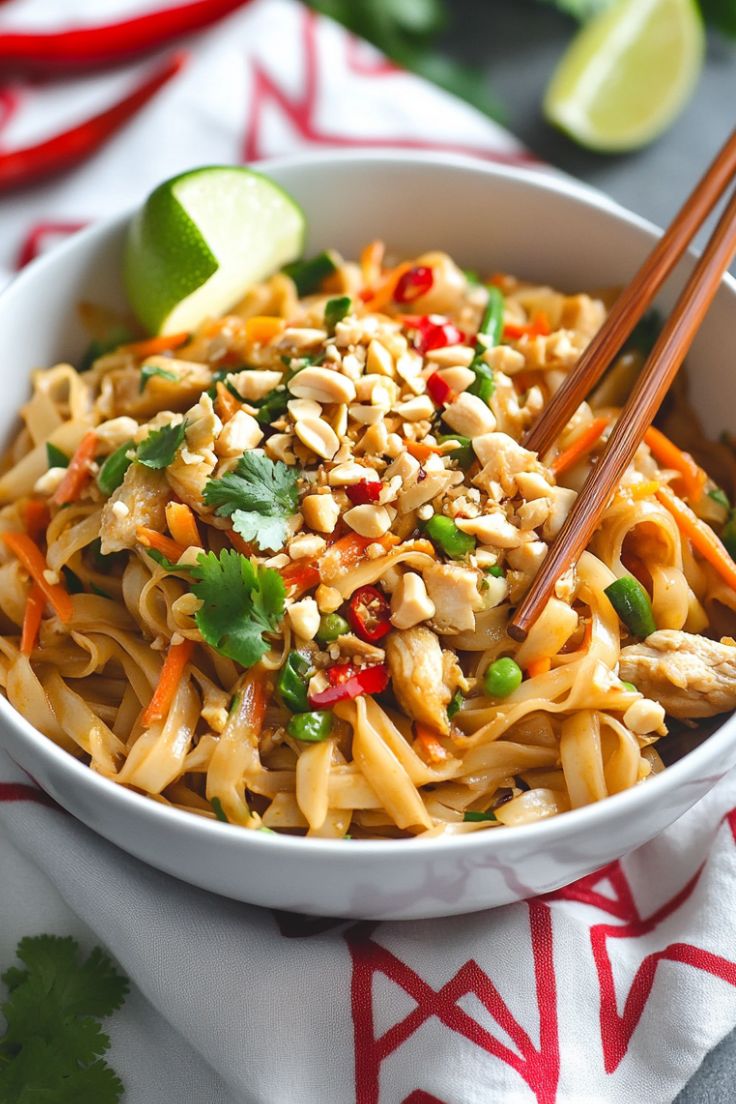
How to Serve Easy Pad Thai
Pad Thai is satisfying on its own, thanks to the combination of rice noodles, protein, eggs, and vegetables. The fresh garnishes make it feel complete without requiring lots of additional preparation.
For a larger meal, consider serving it with one of these options:
-
Fresh cucumber salad: A crisp, refreshing side provides a pleasant contrast to the warm noodles.
-
Steamed vegetables: Serve with broccoli or other simply prepared vegetables for an additional vegetable side.
-
Fresh lime wedges: Put extra lime on the table so everyone can brighten their own serving.
-
Extra chopped peanuts: Offer these separately for anyone who enjoys a little more crunch.
-
A light drink: Water with lime or an unsweetened iced tea pairs nicely with the sweet, tangy, and savory flavors.
For a casual dinner, serve the noodles straight from the pan or arrange individual portions in bowls with the garnishes on top. If you’re serving several people, keep the extra toppings on the table so everyone can customize their plate.
Make-Ahead and Storage Tips
Can You Prepare Pad Thai Ingredients Ahead of Time?
Yes. The recipe specifically recommends preparing the protein, chopping the vegetables, and mixing the sauce in advance. Store the prepared components appropriately until you’re ready to cook.
This simple preparation can make the cooking process feel much more manageable on a busy evening.
How to Store Leftover Pad Thai
Store leftover Pad Thai in an airtight container in the refrigerator for the period specified in the original recipe notes: up to 2–3 days.
Refrigerate leftovers promptly rather than leaving the cooked dish at room temperature for an extended period.
How to Reheat Pad Thai
Reheat refrigerated leftovers until thoroughly hot. A pan on the stovetop is a practical option for gently warming the noodles and allowing you to stir them as they heat.
If the noodles have clumped together during storage, gently separate them as they warm. Avoid overheating them, which can make their texture less appealing.
Can You Freeze Pad Thai?
The recipe does not provide tested freezing instructions. Rice noodles can change texture after freezing and thawing, so freezing may affect the final result.
For the best texture, preparing the ingredients ahead and cooking the dish when you’re ready to eat is the more reliable approach.
Frequently Asked Questions
1. How do I keep my Pad Thai noodles from clumping or getting too soft?
Soak the rice noodles in room temperature water for about an hour instead of boiling them. This keeps them from getting too soft. When stir-frying, work in small batches to avoid steaming the noodles, which can make them sticky.
2. What can I use if I don’t have tamarind paste?
No tamarind? No problem! Mix equal parts lime juice and brown sugar to get a similar tangy-sweet flavor. But if you can find tamarind paste, it’s worth it—it gives Pad Thai its signature taste!
3. How can I adjust the spice level?
If you love heat, add extra Sriracha or red pepper flakes while cooking. Prefer it mild? Just leave it out and serve chili flakes on the side so everyone can adjust to their own taste.
4. Can I make this vegetarian or vegan?
Absolutely! Swap the fish sauce for soy sauce or tamari, leave out the eggs, and use tofu as your protein. Just as flavorful, just as delicious!
5. What’s the biggest mistake to avoid when making Pad Thai?
Overcooked noodles and skipping key ingredients! Don’t boil the noodles, and be sure to use a balance of sweet, salty, sour, and umami flavors—that’s what makes Pad Thai so addictive.
Easy Pad Thai Recipe
Ingredients
For the Pad Thai:
- 8 oz flat rice noodles
- 3 tbsp oil
- 3 cloves garlic, minced
- 8 oz shrimp, chicken, or extra-firm tofu, diced
- 2 eggs, beaten
- 1 cup fresh bean sprouts
- 1 red bell pepper, thinly sliced
- 3 green onions, chopped
- ½ cup dry roasted peanuts
- 2 limes, cut into wedges
- ½ cup fresh cilantro, chopped
For the Pad Thai Sauce:
- 3 tbsp fish sauce
- 1 tbsp low-sodium soy sauce
- 5 tbsp light brown sugar
- 2 tbsp rice vinegar (or tamarind paste for a more authentic flavor)
- 1 tbsp Sriracha (adjust to taste)
- 2 tbsp creamy peanut butter (optional for extra creaminess)
Instructions
Prepare the Noodles:
- Cook the rice noodles according to the package instructions until just tender.
- Rinse under cold water to prevent sticking and set aside.
Make the Sauce:
- In a bowl, whisk together all sauce ingredients until well combined. Set aside.
In a bowl, whisk together all sauce ingredients until well combined. Set aside.Stir-Fry:
- Heat 1½ tbsp oil in a wok or large pan over medium-high heat.
- Add shrimp, chicken, or tofu, along with garlic and bell pepper.
- If using shrimp, cook for 1-2 minutes per side until pink. If using chicken, cook for 3-4 minutes, flipping once until fully cooked.
Cook the Eggs:
- Push everything to one side of the pan. Add a little more oil if needed.
- Pour in the beaten eggs and scramble, breaking them into small pieces as they cook.
Combine Everything:
- Add the cooked noodles, prepared sauce, bean sprouts, and peanuts (reserving some for garnish).
- Toss everything together until well mixed and heated through.
Serve:
- Garnish with green onions, extra peanuts, cilantro, and lime wedges.
- Serve immediately and enjoy!
Nutrition